
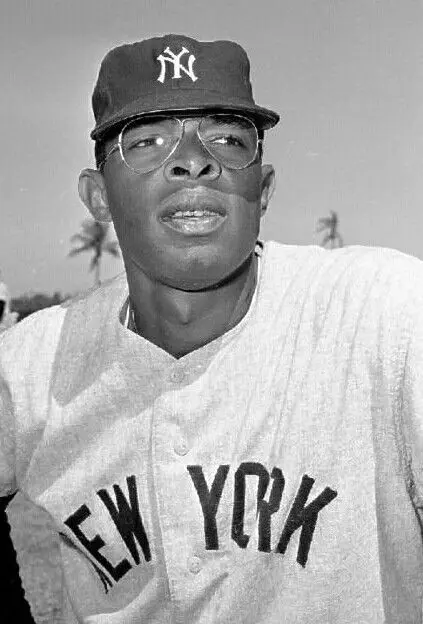
Clarke has earned a batting average of .256 for his career in baseball in addition to 548 runs scored and an OPS of .444. For his time in the league, he faced a pitcher 5,243 times and has come through with a base knock 1,230 times. He has compiled a slugging percentage of .136 and he has a total of 1,507 bases. For his professional baseball career, Clarke has slapped 27 balls out of the park while knocking in 304 runs. He has struck out 362 times and has walked on 365 occasions, contributing to a .308 OBP.
Horace Clarke
Horace Clarke is a name that resonates with fans of the New York Yankees and those who appreciate the rich history of Major League Baseball. Known for his solid performance as a baseball hitter, Clarke’s career in the MLB, particularly with the Yankees, spans an era often overlooked. While he may not have garnered the same level of fame as some of his contemporaries, Clarke’s contributions to the game and his team were significant. Let’s dive into the life and career of Horace Clarke, shedding light on his contribution to Yankees history and the world of baseball.
Clarke’s journey through baseball is one of perseverance and dedication, illustrating the path of a player who thrived through hard work and determination. His career serves as a bridge between the Yankees’ golden years and a new era, marking a period of transition for one of baseball’s most storied franchises. His legacy, although perhaps understated, is firmly etched in the annals of baseball history.
Early Life and Beginnings
Horace Meredith Clarke was born on June 2, 1939, in Frederiksted, on the island of Saint Croix in the U.S. Virgin Islands. His journey to Major League Baseball was not a typical one. Growing up in a region not known for producing baseball talent, Clarke’s passion for the sport was evident from a young age. He honed his skills in local leagues before making a move that would change his life forever.
The path from the U.S. Virgin Islands to the major leagues is a challenging one, with few precedents at the time. Clarke’s early years were marked by a love for baseball that transcended the limited opportunities available to him. His determination and natural ability allowed him to stand out, catching the attention of scouts despite the geographical challenges. In 1958, Clarke was signed by the New York Yankees as an amateur free agent. This marked the beginning of a promising career in professional baseball. Clarke’s dedication and work ethic quickly caught the attention of the Yankees’ scouts, and he steadily climbed the ranks of the minor leagues.
His time in the minor leagues was a testament to his perseverance. Clarke faced numerous challenges, adapting to a new country and culture while striving to make his mark in baseball. His rise through the ranks was steady, a reflection of his unwavering commitment to the sport. His efforts culminated in an opportunity to join the major leagues, a dream come true for the young athlete from Saint Croix.
Rise to the Major Leagues
Clarke made his MLB debut with the Yankees on May 13, 1965. During this period, the Yankees were transitioning from their dominant years of the 1950s and early 1960s. Despite the team’s struggles, Clarke emerged as a reliable and consistent player. His ability to play both second base and shortstop added value to the Yankees’ roster.
His versatility was a key asset during a time when the Yankees were seeking to rebuild and find new talent to lead them into the future. Clarke’s adaptability on the field made him a crucial part of the team’s strategy, as he was able to fill multiple roles when needed. His debut marked the beginning of a decade-long career with the Yankees, a period defined by both individual growth and team challenges.
Impact on the Yankees
Clarke’s career with the Yankees spanned from 1965 to 1974, a decade often referred to as the “Horace Clarke Era.” This era was marked by the Yankees’ absence from postseason play, which was a stark contrast to their previous success. However, Clarke’s individual performance was noteworthy.
As a switch-hitter, Clarke provided versatility and stability in the Yankees’ lineup. His career batting average of .256 and his knack for getting on base made him a valuable asset. Clarke led the American League in at-bats in 1970 and 1971, showcasing his durability and consistency. These achievements underscored his importance to the team, particularly during a period when the Yankees were in a state of flux.
While the Yankees as a team may not have achieved the heights they once enjoyed, Clarke’s contributions were vital in maintaining a competitive edge. His ability to adapt and perform consistently was a stabilizing force for the team. The resilience he demonstrated on the field became a defining characteristic of his career, earning him respect from teammates and fans alike.
Memorable Moments
One of Clarke’s most memorable achievements was on June 4, 1970, when he broke up a no-hitter by Detroit Tigers pitcher Joe Niekro with a single in the ninth inning. This act of resilience and determination defined Clarke’s playing style and left a lasting impression on fans and teammates alike.
This moment was a testament to Clarke’s tenacity and competitive spirit. Throughout his career, he was known for his ability to rise to the occasion, often delivering crucial plays under pressure. These instances of brilliance were not only highlights of his career but also emblematic of his unwavering commitment to the game.
The Role of Defense
While Horace Clarke was known for his batting, his defensive skills were equally impressive. As a second baseman, he was involved in numerous double plays, and his quick reflexes and strong arm made him a formidable presence on the field.
Clarke’s defensive prowess was a key component of his game, providing the Yankees with a reliable and effective presence in the infield. His ability to execute double plays with precision and his keen sense of positioning contributed significantly to the team’s defensive strategy. His role as a second baseman was integral, often setting the tone for the team’s performance on the field.
The Infamous “Clarke Era”
The term “Clarke Era” is often used to describe a challenging period in Yankees history. Although the team did not achieve postseason success during Clarke’s tenure, it’s important to recognize the contributions of players like Clarke who laid the groundwork for future successes. His dedication and consistent performance provided a foundation during a rebuilding phase for the Yankees.
This era, while difficult, was pivotal for the Yankees as it allowed for the development of new talent and strategies. Clarke’s presence provided stability during uncertain times, and his leadership by example set a standard for future generations of Yankees players. His role in this transitional phase was crucial, helping to pave the way for the team’s eventual resurgence.
Life After Baseball
After retiring from Major League Baseball in 1974, Clarke returned to the U.S. Virgin Islands, where he continued to contribute to the sport by coaching young athletes and promoting baseball throughout the region. His commitment to nurturing talent and inspiring the next generation of players highlights his enduring love for the game.
Clarke’s post-baseball endeavors were marked by a deep desire to give back to his community. By investing in the development of young athletes, he sought to create opportunities that were not available to him growing up. His work in the U.S. Virgin Islands helped to foster a new generation of baseball players, contributing to the growth of the sport in the region.
His dedication to mentorship and coaching extended his impact beyond his playing years, leaving a lasting legacy in the U.S. Virgin Islands. Clarke’s efforts to promote baseball and inspire young athletes underscore his passion for the game and his commitment to making a difference.
Legacy and Recognition
Horace Clarke’s impact on baseball extends beyond his playing years. He is remembered as a player who gave his all on the field and as a pioneer from the U.S. Virgin Islands who made it to the major leagues. His story serves as an inspiration to aspiring athletes from underrepresented regions.
Clarke’s journey from a small island to the major leagues is a testament to the power of perseverance and dedication. His success story is a beacon of hope for young athletes facing similar challenges, demonstrating that talent and hard work can overcome barriers. His achievements have paved the way for future players from the U.S. Virgin Islands, inspiring a new generation to pursue their dreams.
A Look Back at Yankees History
The New York Yankees have a storied history filled with legendary players and iconic moments. While the “Horace Clarke Era” may not have been marked by championships, it was a period of transition and resilience. Clarke’s contributions to the team during this time are a testament to the enduring spirit of baseball and the Yankees’ legacy.
The era in which Clarke played was one of change and adaptation for the Yankees, as they sought to rebuild and redefine their identity. Clarke’s role in this process was pivotal, providing stability and leadership when it was needed most. His legacy is a reminder of the importance of perseverance and dedication in the face of adversity, qualities that are central to the Yankees’ storied history.
Conclusion
Horace Clarke may not be the first name that comes to mind when thinking of Yankees legends, but his role in the team’s history is undeniable. As a consistent and reliable player, he navigated an era of change with grace and determination. Clarke’s journey from the U.S. Virgin Islands to the major leagues is a testament to his talent and dedication to the sport. His legacy continues to inspire baseball fans and players around the world.
In the grand tapestry of Yankees history, Horace Clarke’s story adds depth and richness, reminding us of the diverse paths that lead to the pinnacle of baseball success. His contributions during a challenging period for the Yankees highlight the importance of resilience and adaptability in sports. Clarke’s story is one of inspiration, illustrating the impact that one player’s dedication can have on a team and the broader world of baseball.