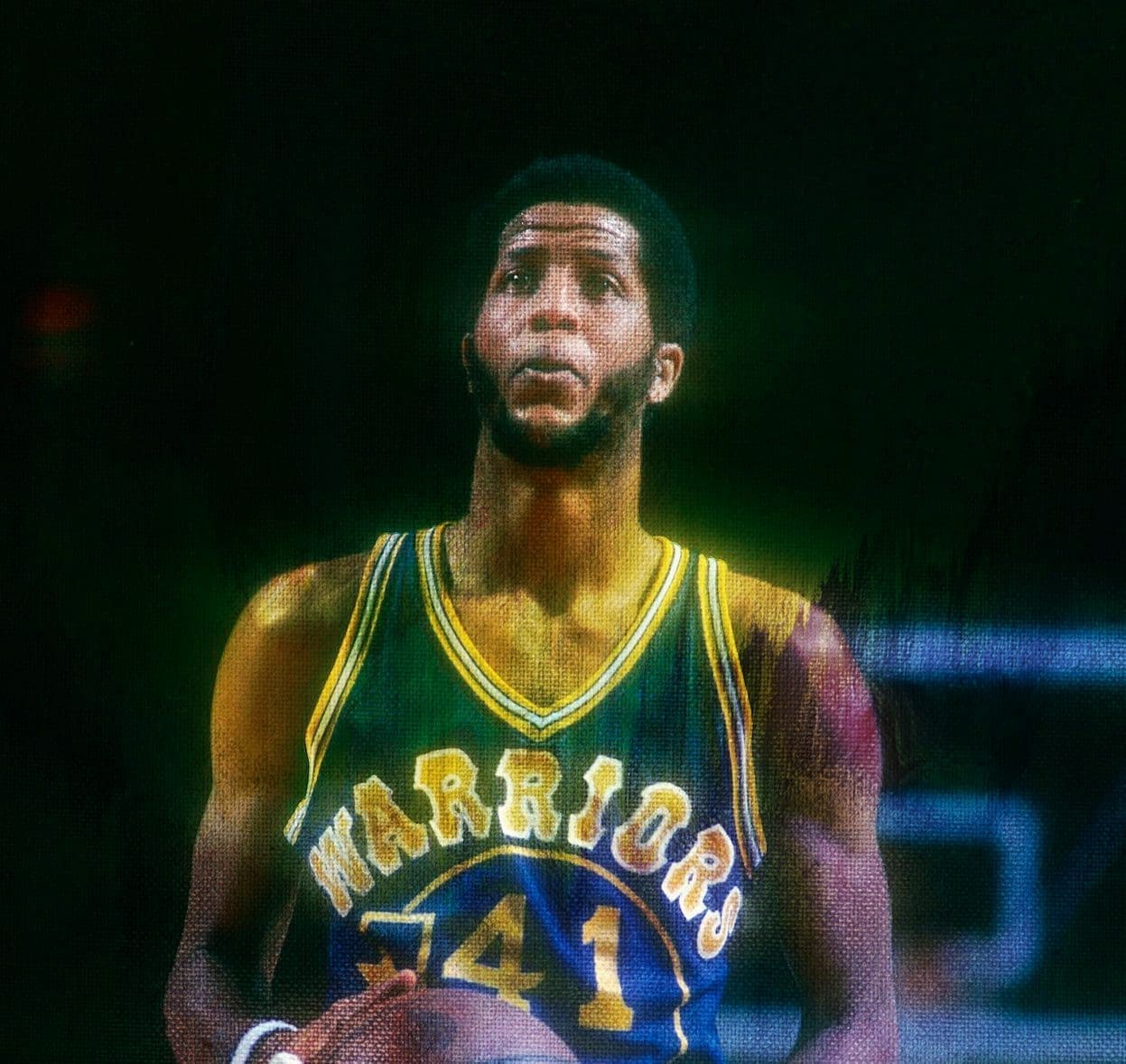
Jamaal Wilkes has taken the court in 828 contests in his NBA career and tallied 27,275 minutes in those matchups. Wilkes was named a starter in 491 games, and in those games he is averaging 17.7 points/G and has 14,644 points in total. He scores 19.3 points per 36 mins, as well as collecting 6.8 rebounds and racking up 2.7 dimes in his NBA career. By converting 6,226 baskets out of 12,471 tries, Wilkes has accrued a 49.9% field goal percentage. By putting in 7 out of his 52 shots from long range, he has recorded a three-point shooting percentage of 13.5%. By converting 6,219 of 12,419 2pt shots, he has accumulated a rate of 50.1%. Wilkes has converted 2,185 of 2,878 shots at the free throw line, putting him at a rate of 75.9%. Sitting with an eFG% of 50.0%, he has also recorded 2,296 infractions and 1,211 giveaways. Sitting with 3,490 defensive rebounds and 1,627 offensive, Wilkes has earned 5,117 rebounds in total during his pro basketball career. He has 1,049 steals, as well as 262 rejections and 2,050 dimes. When talking about stats per game, Wilkes is averaging 2.5 assists as well as 6.2 rebounds.
Jamaal Wilkes, a name that resonates with basketball enthusiasts, is renowned for his unique style and remarkable achievements on the court. His NBA career spanned over a decade, during which he played a pivotal role in several championship victories. Let’s delve into the illustrious career of Jamaal Wilkes, a player whose elegance and efficiency earned him a place among the basketball greats.
Early Beginnings
Born on May 2, 1953, in Berkeley, California, Jamaal Wilkes began his basketball journey at the University of California, Los Angeles (UCLA). Under the legendary coach John Wooden, he honed his skills and became an essential part of the UCLA Bruins, contributing to their NCAA Championships in 1972 and 1973. His collegiate success paved the way for a promising professional career.
NBA Draft and Rookie Success
Wilkes entered the NBA as the 11th overall pick in the 1974 NBA Draft, selected by the Golden State Warriors. His impact was immediate, earning him the NBA Rookie of the Year award in 1975. That same year, he helped the Warriors secure the NBA Championship, showcasing his ability to perform under pressure.
Golden State Warriors: Building a Legacy
During his tenure with the Warriors, Wilkes developed a reputation for his smooth shooting technique and defensive prowess. His time with the Warriors solidified his place in the league as a versatile forward who could score efficiently and defend diligently. His exceptional play was not just limited to the offensive end; he was equally adept at contributing to his team’s defensive efforts.
Los Angeles Lakers: Showtime Era
In 1977, Jamaal Wilkes joined the Los Angeles Lakers, marking the beginning of an era that fans fondly remember as “Showtime.” Playing alongside Magic Johnson and Kareem Abdul-Jabbar, Wilkes was instrumental in the Lakers’ success during the late 1970s and early 1980s. His ability to seamlessly integrate into the team’s fast-paced style of play made him an invaluable asset.
Career Highlights and Stats
Wilkes’ tenure with the Lakers was marked by three NBA Championships in 1980, 1982, and 1985. His performance in Game 6 of the 1980 NBA Finals, where he scored 37 points, remains one of his most memorable achievements. Over his 12-season career, Wilkes amassed impressive stats, averaging 17.7 points, 6.2 rebounds, and 2.5 assists per game.
Legacy and Hall of Fame Induction
Jamaal Wilkes’ contributions to basketball were officially recognized when he was inducted into the Naismith Memorial Basketball Hall of Fame in 2012. His career stats and accolades speak volumes about his impact on the game, but it was his grace and sportsmanship that left a lasting legacy.
In conclusion, Jamaal Wilkes’ NBA career is a testament to his dedication, skill, and sportsmanship. His journey from UCLA to the NBA Hall of Fame is an inspiring story for aspiring basketball players and fans alike. Whether remembered for his smooth shot or his championship wins, Wilkes remains a celebrated figure in the history of basketball.