Concerning per game stats, Malone has an average of 2.4 dimes in addition to 2.6 rebounds. He has tallied 577 steals, as well as 100 blocks and 2,154 assists. Having pulled down 1,792 defensive boards and 572 offensive, Malone has a tally of 2,364 boards in total in his pro basketball career. While he has earned an eFG% of 48.7%, he has also recorded 1,695 personal fouls and 1,538 turnovers. Malone has buried 2,947 of 3,383 attempts from the free throw line, putting him at a clip of 87.1%. By making 7,013 out of 14,353 two-point shots, he has recorded an average of 48.9%. By knocking down 86 out of 321 baskets from downtown, he has recorded a three-point shooting percentage of 26.8%. By putting in 7,099 shots of his 14,674 tries, Malone has accounted for a 48.4% shot %. He scores 20.9 points per 36 minutes, as well as collecting 2.9 rebounds and collecting 2.6 dimes so far in his career. Malone has started in 755 contests, and in those games he owns an average of 19.0 PPG and has earned 17,231 points in all. Jeff Malone has stepped onto the hardwood in 905 games during his NBA career and is sitting with 29,660 minutes in those games.
Jeff Malone, a name that resonates with basketball enthusiasts, was a formidable shooting guard during his NBA career. Known for his smooth jump shot and consistent scoring ability, Malone left an indelible mark on the league. This article explores Jeff Malone’s NBA journey, highlighting his career stats, contributions, and lasting impact on the game.
Early Life and College Success
Jeffrey Nigel Malone was born on June 28, 1961, in Mobile, Alabama. From a young age, his talent on the basketball court was evident. He honed his skills at Southwest Macon High School in Macon, Georgia, where he became one of the most promising prospects in the state.
Malone continued to shine in college at Mississippi State University. During his time there, he developed a reputation as a prolific scorer, ultimately becoming the all-time leading scorer in Mississippi State history. His college success set the stage for a promising NBA career.
Entering the NBA
In the 1983 NBA Draft, the Washington Bullets (now known as the Washington Wizards) selected Jeff Malone with the 10th overall pick. His entry into the NBA was met with great anticipation, as fans and analysts alike were eager to see if his college success would translate to the professional level.
Washington Bullets: The Early Years
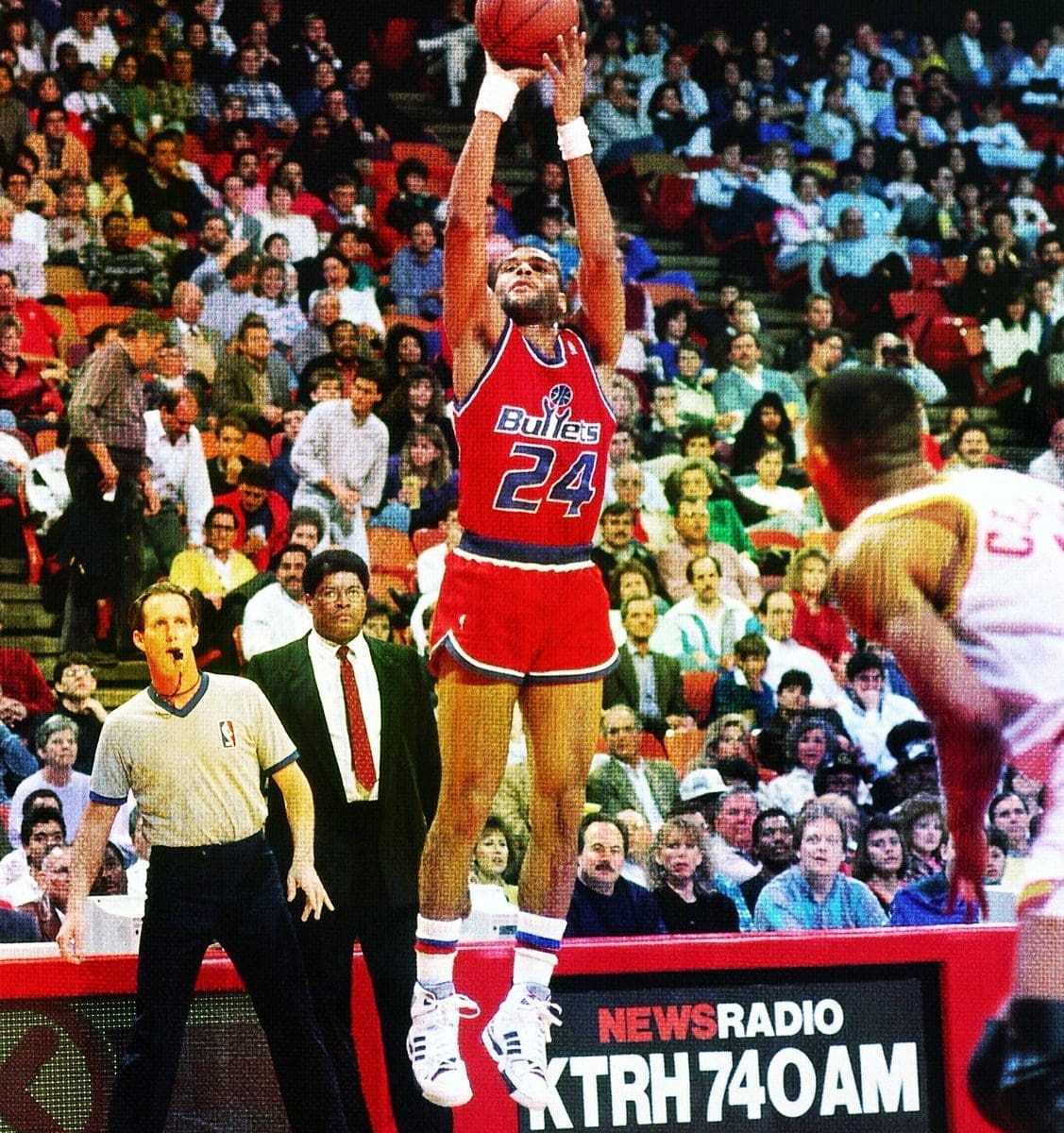
Jeff Malone quickly established himself as a key player for the Washington Bullets. Known for his exceptional shooting ability, he became a consistent scoring threat. During his time with the Bullets, Malone averaged over 20 points per game for six consecutive seasons, showcasing his scoring prowess.
One of Malone’s standout performances came during the 1985-86 season when he averaged a career-high 22.4 points per game. His ability to create his shot and deliver under pressure made him a fan favorite and a reliable player in clutch situations.
Transition to the Utah Jazz
In 1990, after seven seasons with the Bullets, Malone was traded to the Utah Jazz. This move marked a new chapter in his career, as he joined forces with legends like Karl Malone (no relation) and John Stockton. Together, they formed a formidable trio that would lead the Jazz to multiple playoff appearances.
During his time with the Jazz, Jeff Malone continued to be a scoring machine. His ability to complement the playmaking skills of Stockton and the inside dominance of Karl Malone added a new dimension to the team’s offense. His tenure with the Jazz further solidified his reputation as one of the premier shooting guards in the league.
Career Stats and Achievements
Jeff Malone’s career stats speak volumes about his impact on the court. Over his 13-year NBA career, he accumulated impressive numbers:
- Points: 17,231 (19.0 points per game)
- Rebounds: 2,565 (2.8 rebounds per game)
- Assists: 2,142 (2.4 assists per game)
Malone was a two-time NBA All-Star, earning selections in 1986 and 1987. His scoring ability and consistency were key factors in his All-Star appearances. Additionally, he was known for his durability, playing in over 80 games in seven different seasons.
Impact Beyond the Numbers
While Jeff Malone’s stats are impressive, his impact extended beyond the numbers. His smooth shooting style and clutch performances made him a player that teammates and fans could rely on. He was known for his work ethic and professionalism, qualities that set an example for younger players.
Later Years and Retirement
After successful stints with the Bullets and Jazz, Malone went on to play for the Philadelphia 76ers and the Miami Heat before retiring in 1996. Even in the twilight of his career, Malone remained a valuable asset, contributing to his teams with his veteran experience and scoring ability.
Following his retirement from professional basketball, Jeff Malone remained connected to the sport. He ventured into coaching and briefly served as the head coach for the Columbus Riverdragons in the NBA Development League (now known as the NBA G League). His passion for the game continued to influence and inspire young athletes.
Legacy and Influence
Jeff Malone’s legacy in the NBA is defined by his scoring prowess, consistency, and professionalism. As one of the league’s top shooting guards during his career, he set a standard for excellence that aspiring players still look up to.
His journey from a promising high school athlete to an NBA All-Star serves as a testament to the power of dedication and hard work. Malone’s influence extends beyond the court, as he remains a respected figure in the basketball community.
Conclusion
Jeff Malone’s NBA career is a story of talent, perseverance, and achievement. From his early days in Mobile, Alabama, to his time as a standout player in the NBA, Malone’s journey is a testament to the impact that a dedicated athlete can have on the game of basketball.
As fans and historians look back on his career, Jeff Malone is remembered not only for his impressive stats but also for his contributions to the teams he played for and the game he loved. His legacy as a scoring machine and a model professional continues to inspire future generations of basketball players.