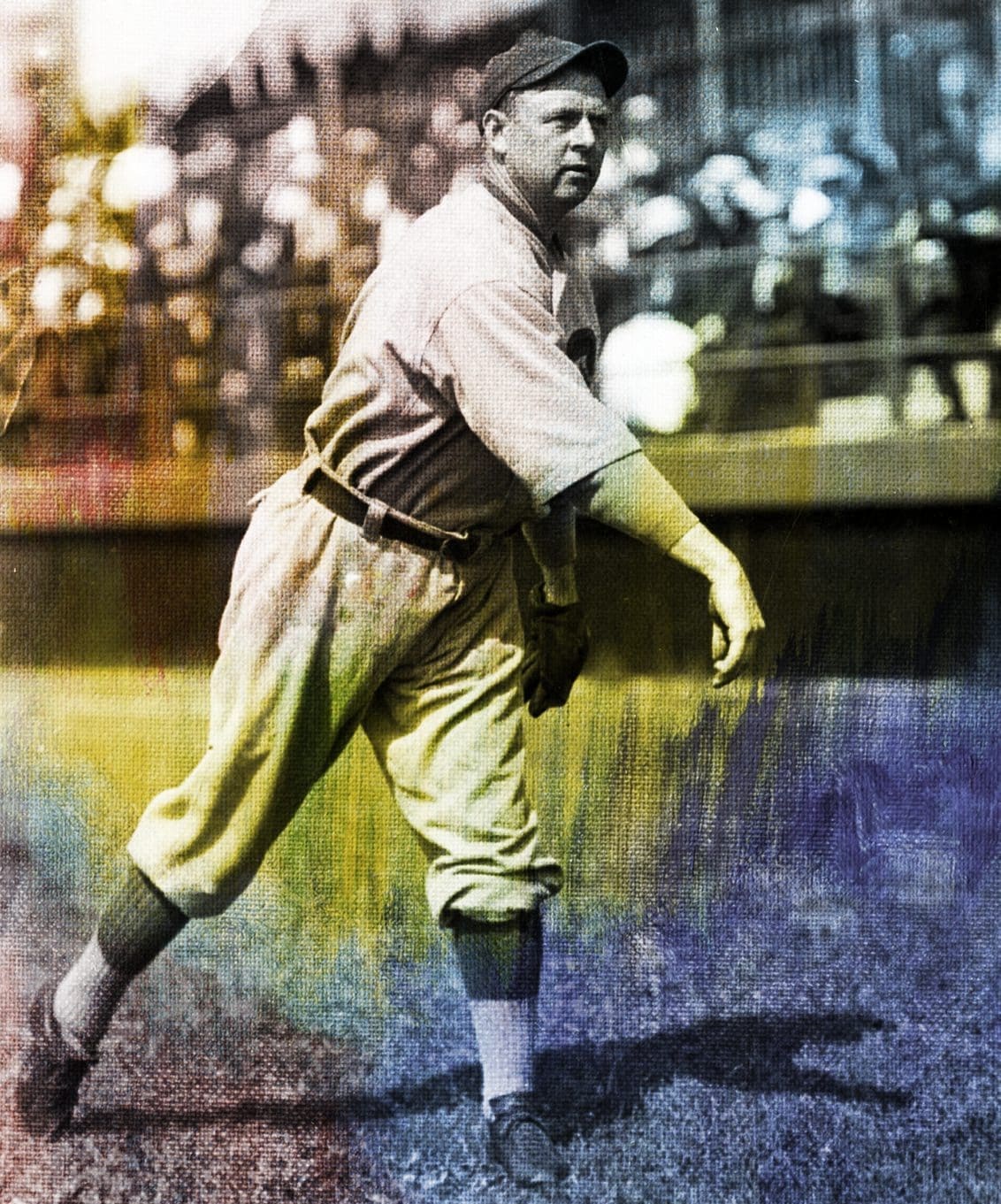
Brown (239-130 career record) has a FIP of 2.03 while going up against 12,450 opposing hitters in the major leagues. His ERA is 2.06 (725 earned runs allowed) and he has a WHIP of 1.066. He has given up 2,708 base knocks (7.7 hits per 9 innings) and has had 673 free passes. Brown has pitched in 3,172 frames and has earned 1,375 punch outs in his career.
Mordecai Brown Stats
Mordecai Peter Centennial Brown, often known simply as Mordecai Brown, was a remarkable figure in Major League Baseball (MLB). Born on October 19, 1876, in Nyesville, Indiana, Brown rose to fame not just for his skill on the mound, but also for his unique pitching style that came as a result of a childhood accident. This article delves into the life and career of Mordecai Brown, the Stats who left an indelible mark on the sport.
Early Life and Background
Mordecai Brown’s journey to baseball greatness began in a rather unusual way. As a child, he suffered a severe injury to his right hand. While helping his father on the family farm, he accidentally got his hand caught in a corn shredder, resulting in the loss of parts of two fingers and leaving him with a deformed hand. This injury, while tragic, ultimately contributed to his success on the baseball field.
Despite the challenges posed by his injury, Brown developed a unique pitching style that baffled hitters. His deformed hand allowed him to put an extraordinary spin on the ball, which resulted in an unpredictable, curving trajectory. This earned him the nickname “Three Finger” Brown, a moniker that would follow him throughout his career.
Rise to MLB Fame
Brown began his professional baseball career in the minor leagues, where he quickly gained attention for his exceptional pitching. His big break came in 1903 when he joined the St. Louis Cardinals in the MLB. It was here that Brown started to showcase his talent on a larger stage, and his impressive performances soon caught the eye of the Chicago Cubs.
Chicago Cubs and Hall of Fame Career
In 1904, Brown joined the Chicago Cubs, where he would spend the majority of his MLB career. His time with the Cubs marked the peak of his career, as he became a key player in one of the most dominant teams of the era. Brown’s pitching prowess was instrumental in leading the Cubs to four National League pennants and two World Series championships in 1907 and 1908.
During his tenure with the Cubs, Brown was known for his fierce competitiveness and his ability to pitch under pressure. He possessed an arsenal of pitches, including a fastball, curveball, and his signature pitch, the “fadeaway,” which was akin to what is now known as a screwball. His exceptional control and deceptive pitches made him one of the most feared pitchers of his time.
Baseball Stats and Achievements
Mordecai Brown’s career statistics are a testament to his skill and impact on the game. Over his 14-year career in the MLB, he achieved an impressive win-loss record of 239-130. His career earned run average (ERA) of 2.06 is one of the lowest in baseball history, highlighting his effectiveness on the mound.
Brown’s accomplishments earned him numerous accolades, including being a key player on the Cubs’ World Series-winning teams. He was also selected to the Baseball Hall of Fame in 1949, cementing his legacy as one of the greats in baseball history.
Notable Achievements:
- 2x World Series Champion (1907, 1908)
- 4x National League Pennant Winner
- Inducted into the Baseball Hall of Fame (1949)
- Career ERA of 2.06
- 239 career wins
Legacy and Influence
Mordecai Brown’s influence on baseball extends beyond his impressive statistics. His story is one of resilience and determination, proving that even a severe injury could not deter his passion and talent for the sport. Brown’s unique pitching style inspired many future pitchers and showed that unconventional techniques could lead to success.
His legacy is celebrated not only for his contributions to the Cubs and MLB but also for his character and sportsmanship. Brown was known for his humility and kindness, earning the respect and admiration of teammates and opponents alike.
Life After Baseball
After retiring from professional baseball, Mordecai Brown remained involved in the sport by coaching and managing in the minor leagues. He also ran a successful farm in his hometown of Terre Haute, Indiana. Brown passed away on February 14, 1948, but his legacy lives on through the stories of his remarkable career and the impact he had on the game of baseball.
Conclusion
Mordecai Brown’s story is one of triumph over adversity. Despite a severe injury, he became one of the most successful pitchers in MLB history. His unique pitching style, impressive statistics, and contributions to the Chicago Cubs’ success have earned him a lasting place in the annals of baseball history. The legacy of Mordecai Brown, the Stats, continues to inspire players and fans alike, reminding us of the power of perseverance and innovation in the face of challenges.